
About Oud
Oud, a fragrant resin obtained from the Aquilaria and Gyrinops trees, has a rich and storied history intertwined with religious texts, cultural practices, and economic trade. Its journey spans from ancient scriptures to modern perfumery, making it a captivating subject for exploration.
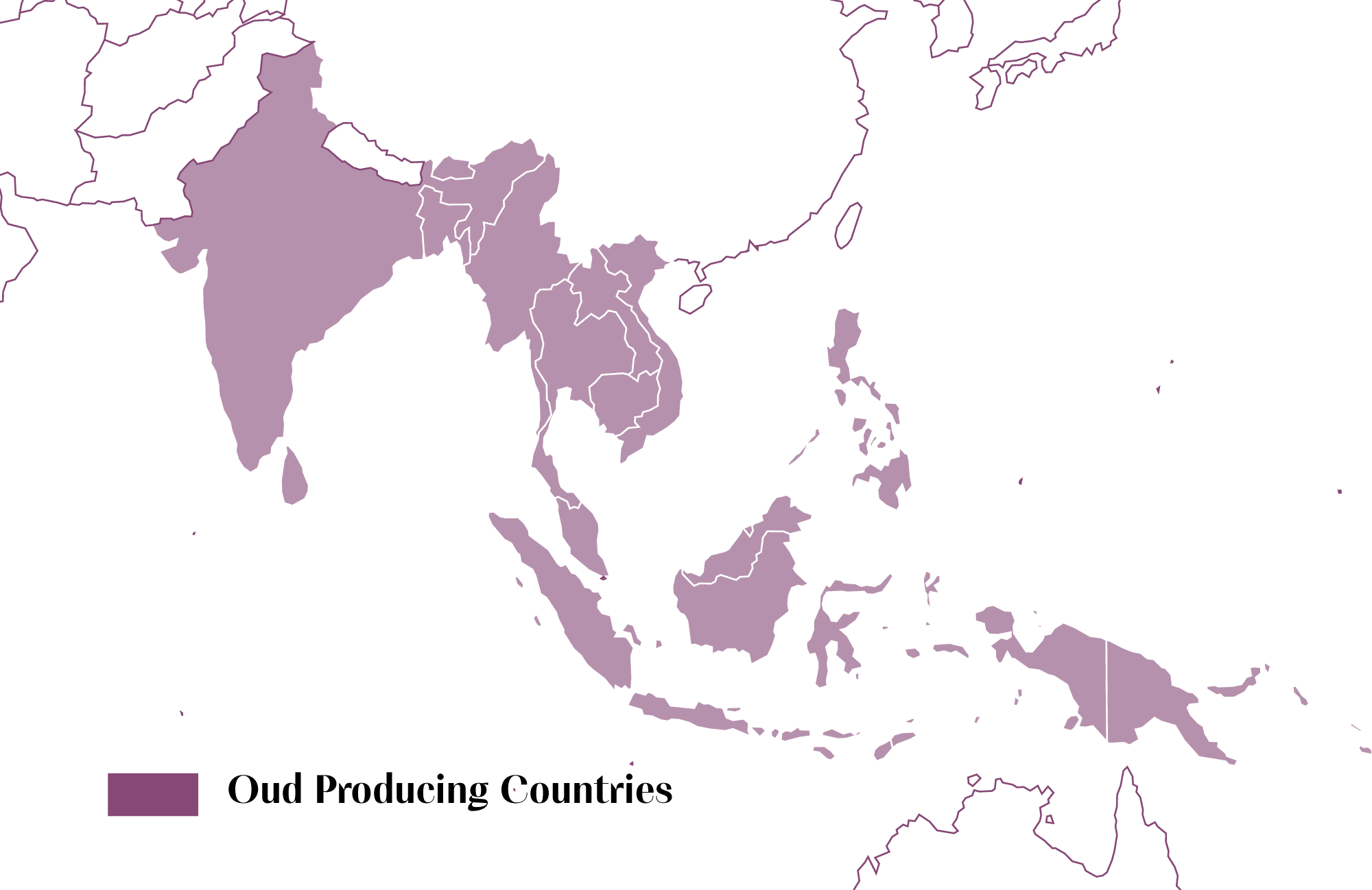
Historical Use and Trade
Oud’s use dates back to ancient civilizations in the Middle East, India, and Southeast Asia. It was highly valued for its fragrance, medicinal properties, and religious significance. The trade of oud flourished along ancient trade routes, connecting these regions and contributing to cultural exchange. In the Islamic world, oud became an integral part of religious rituals, perfumery, and medicine. Its use spread to Europe during the Crusades, where it was embraced by royalty and nobility.
Modern Times and Conservation Challenges
In modern times, oud remains a highly prized ingredient in perfumery, aromatherapy, and traditional medicine. However, the increasing demand for oud has led to overharvesting and illegal logging of Aquilaria trees, pushing many species to the brink of extinction. The Convention on International Trade in Endangered Species of Wild Fauna and Flora (CITES) has played a crucial role in regulating the trade of oud and protecting endangered species.
The Future of Oud: Sustainable Plantations
To ensure the long-term sustainability of the oud industry, efforts are being made to establish sustainable plantations of Aquilaria trees. These plantations offer a viable alternative to wild harvesting, allowing for the controlled production of oud while conserving natural populations. By promoting sustainable practices and supporting responsible sourcing, the future of oud can be secured, preserving its cultural significance and economic value for generations to come.
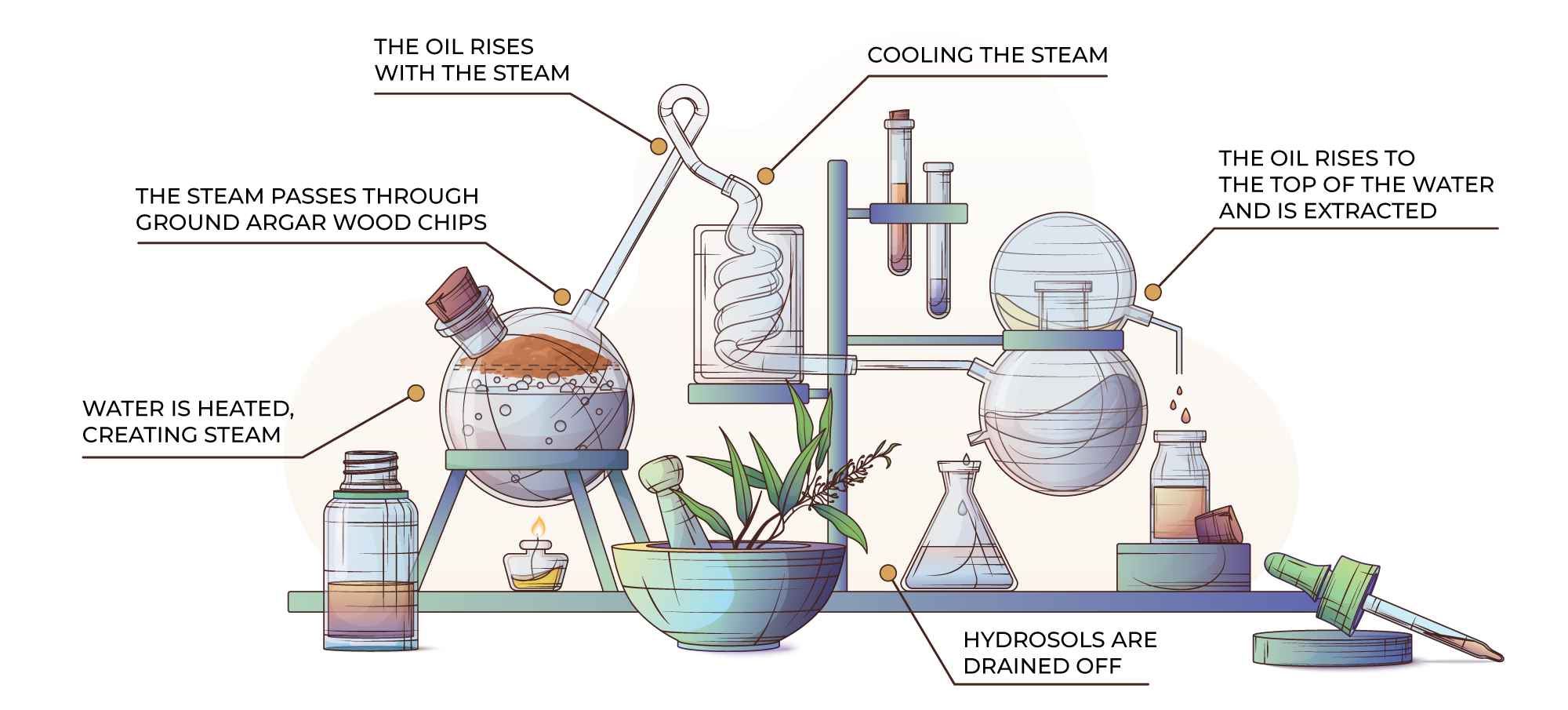
How Oud Oils are made...
Agarwood Products
Attars = Oil based Arabian perfumes with different blends of ingredients such as: agarwood, saffron, musk, amber, sandalwood
Bakhoor = Agarwood powder or shavings mixed with other scents and aromatic woods to be burnt
Dihn al oudh = Agarwood oil
Jedid = Old
Kadim = New
Maliki = royal
Mukhalat = Blended fragrances of agarwood, amber, sandalwood and other
Oudh = Raw agarwood in form of chips
Seufi = sword
Toula = traditional unit of measurement which equals approximately to 11.62 grams, which is applied to both wood chips and agarwood oil, as well as to blended products.